- A Beirut bank can list the dollars and still refuse to let them leave the building.
- Lebanon grew again in 2025. The fighting in March took that back.
- Six years after the port blast, the file is thick and the courtroom is still empty.
A Balance That Does Not Leave
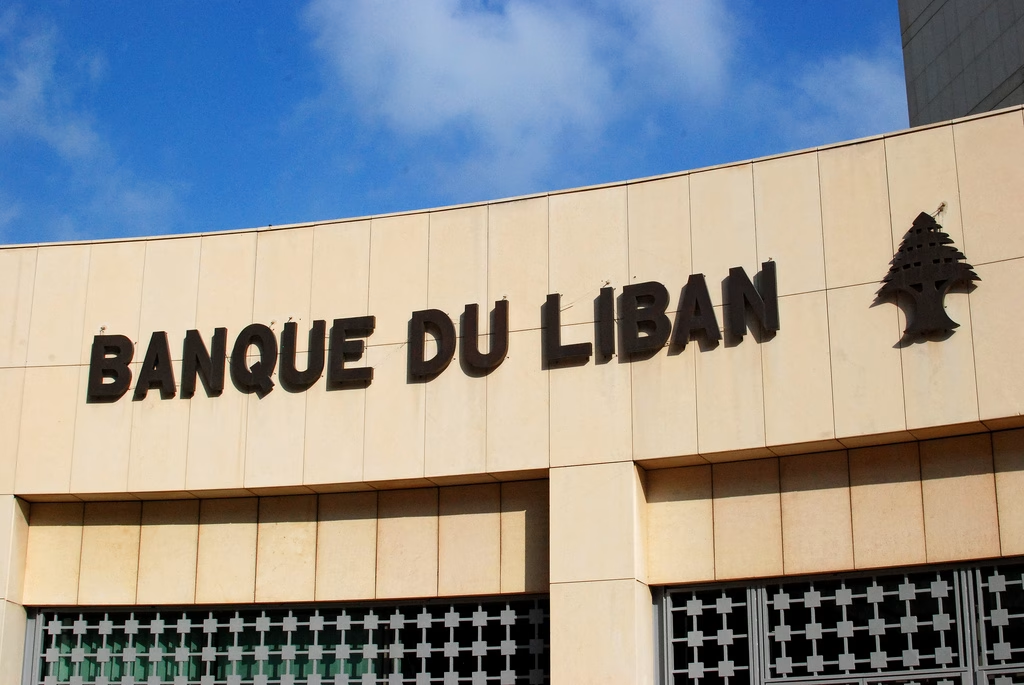
A Lebanese bank app can still show the dollars. The wire is the part that fails. Since the 2019 crash, older balances have sat in a system the World Bank still calls deeply weakened, and the repair work so far has not turned them into money that clears the border.
A pound wage buys a thin slice of the life it bought before the peg broke. Fresh dollars, when a household can earn them, still pay for fuel, rent, and dinner. A restricted account balance mostly pays for a long conversation at the counter.
A Rebound the Fighting Cut Short
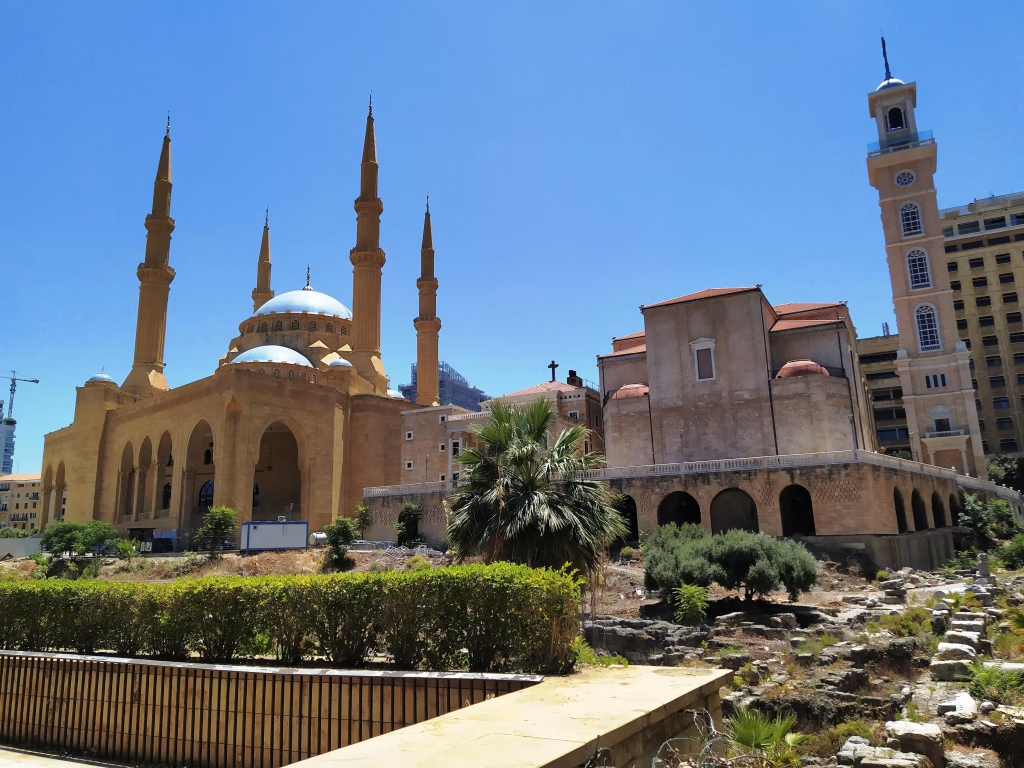
For a short stretch the figures looked less grim. Lebanon grew an estimated 4.2 percent in 2025, the best year since the crash, on shopping, building work, and visitors. Then the March 2026 escalation tore into housing, pushed people out of their neighborhoods, and shut that rebound down. The World Bank now expects the economy to shrink 6.4 percent this year, roughly 10 percentage points worse than a year without the fighting.
Prices are climbing again. Inflation is forecast at 17.5 percent, fed by broken supply lines, dearer shipping, and oil. The pound has held, helped by reserves and a tight supply of local currency, and that hold slips if dollars from abroad slow down. The public debt is still sitting there. Nobody has opened talks to cut it down.
The Bill for Keeping the Lights On
The power stations drink imported fuel. When the state utility cuts the current, the cost does not vanish. It comes back as a generator contract, a water pump that runs only in the hours the grid is on, and a higher price on the shop shelf.
The famous fuel queues flare up and then fade. What stays is a city that cannot count on a full day of grid power. Transport and energy are where the 2026 inflation shows up first, because Beirut still runs on the road.
The Port File Is Still Open
On 4 August 2020 the port explosion killed at least 218 people. The trigger was 2,750 tonnes of ammonium nitrate that had been sitting in the harbour since 2014. Judge Tarek Bitar closed his inquiry on 30 March 2026, and the prosecutor’s written opinion reached him in September.
By mid-October 2026 there was still no indictment and still no trial. Families have spent six years asking how a warehouse of fertilizer became a bomb in the middle of the city. Plenty of powerful people spent those same years keeping the questions away from a courtroom.
Operating Cash Belongs Outside
The useful lesson is not a visa tip. When wages, savings, and the power bill all depend on one restricted banking system, a bad month becomes the way life works. Lebanon imports most of what it uses. Once the dollars stop moving, the shops feel it before the speeches do.
A flag theory split is the plain version: one place to live, another place for the money that has to move. Pounds can buy the coffee. Next month’s bills do not belong in a Beirut deposit the bank may decline to release.
What a Base in Beirut Still Costs
The banking freeze now has company. Homes, schools, and clinics hit in the latest fighting will drag on the country’s productive capacity for years, even if the guns go quiet. Tourism, which helped the 2025 bounce, is the first receipt to vanish when visitors decide to wait.
A season in the city is one decision. Leaving a balance sheet there is another. The banks are only partly under repair, and a debt deal has not opened. Until both move, Beirut is kinder to the person who arrives with cash that can also leave.